How to Bring Your Heritage Into Your Home's Design
A home designed around your heritage celebrates who you are, how you live, and every aspect of your past and present, and because your story is unique, your space feels truly individual and truly yours.
Here's how I approach it: starting with research, informing colour and pattern, then the practical approach of pieces, context, and restraint.
Research
Understanding where a client comes from
Researching where a client is from, and their local design philosophies
The first thing I do is build familiarity with the place itself, not just the country a client is from, but exactly where in that country, immersing myself in it so I get a real feel for how people actually live there. That familiarity is the starting point for digging deeper into the local design philosophies. From there, I get a clear sense of the local design language: the materials used, how spaces are laid out, the colours that recur, and the features that are genuinely distinctive to that place. Is a particular wood used because it's found in that area? Is there a fabric made there that carries a lot of history? In a loft I designed in Brockley, for example, I used louvred wardrobe doors, since louvres are commonly used in buildings across Nigeria, a detail that isn't immediately obvious unless you research a bit deeper. By the end of this stage, the aim is to have moved past any initial assumptions about the place, so the design is grounded in how people actually live and design there, not in a general or stereotyped idea of it.
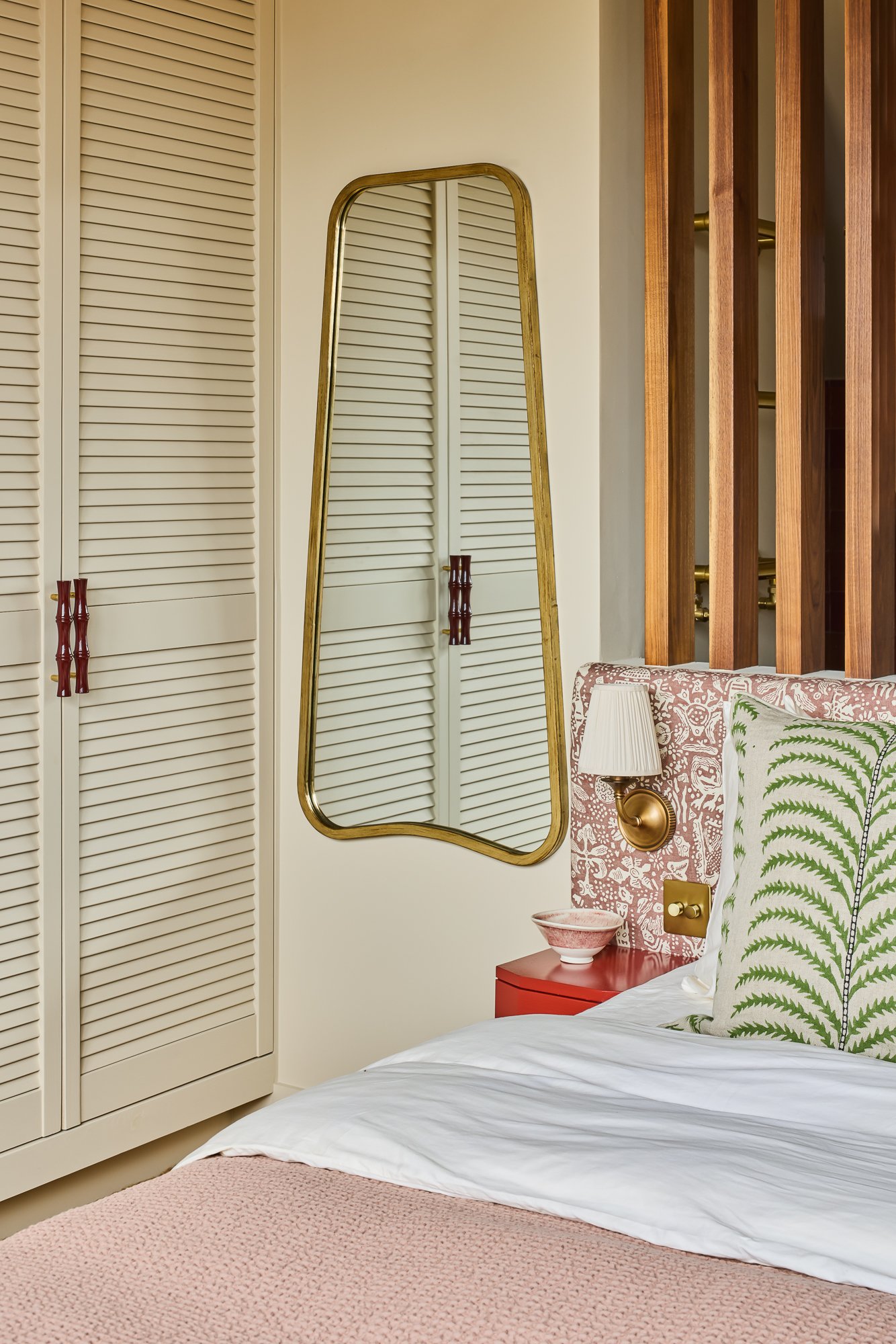
Louvered wardrobe doors
Understanding the history of the place
The history of a place matters just as much as its present. I go to museums, watch documentaries and read history books to build that knowledge, because it tells you why certain materials, colours or motifs came to be used in the first place, and some of the freshest ideas often come from looking to the past rather than the present. For my own home, it was important to speak to both my Nigerian and British heritage, so when I found a 19th-century Benin head in an antique shop in Peckham, made in the same artistic tradition as the Benin plaques looted by the British and now held in the British Museum, it felt right to bring a piece made by Nigerians into the home of a Nigerian. History also teaches you what to avoid: African wax prints are a good example, as beyond their bright colours not always suiting the design style I'm working in, they were originally developed by the Dutch in the 19th century, based on Indonesian batik, and only sold into West Africa once they failed in that original market. That history is why I prefer to use textiles and materials that genuinely originate locally, though it's a personal line I draw, and one others may draw differently.
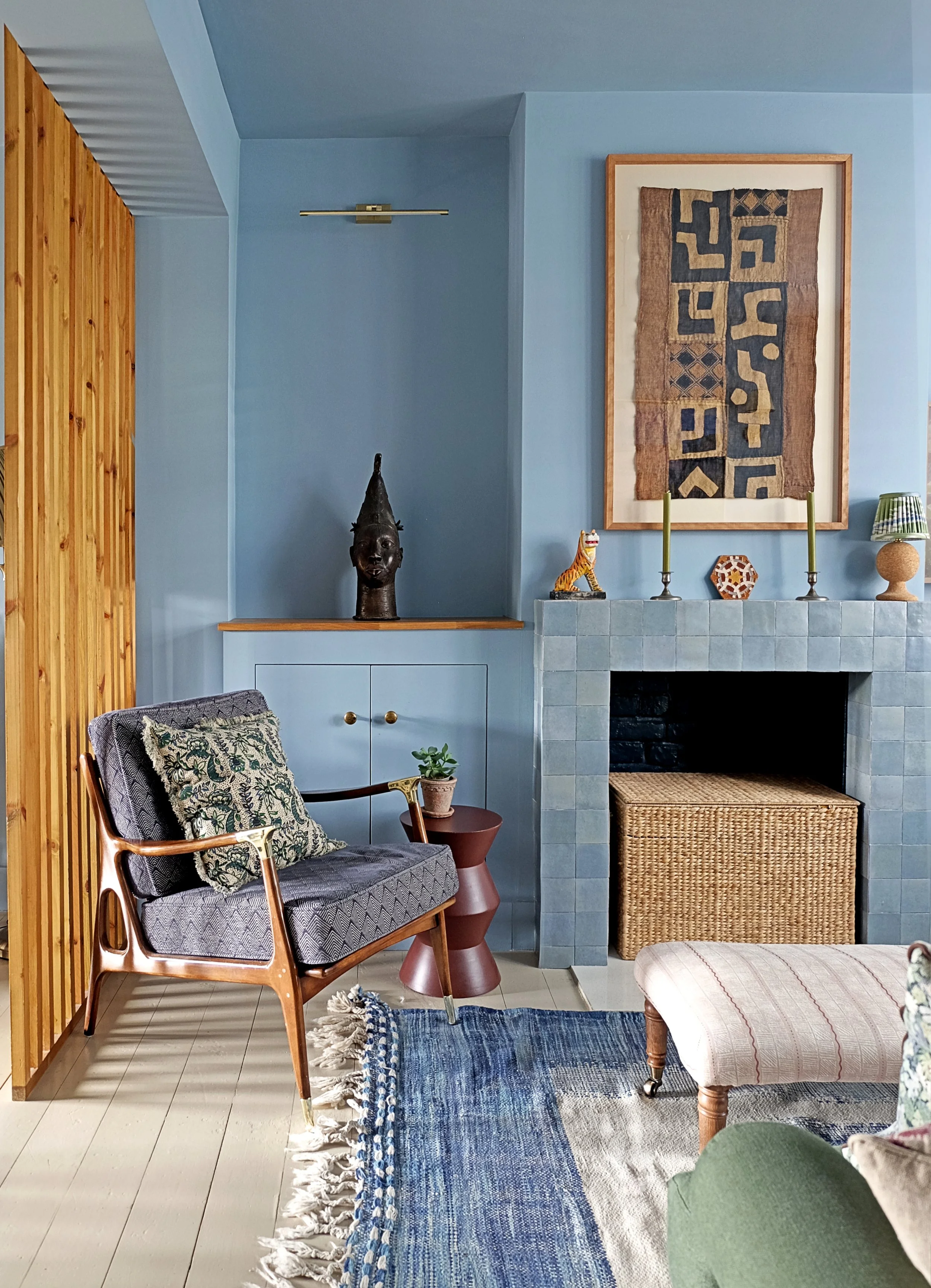
Benin head and Kuba cloth in the living room of this project
Colour & Pattern
Finding the palette and motifs that belong to that place
Reading the colours of the place
Colour comes next. I look at images of the place itself, sometimes the landscape, sometimes the buildings, and often photos the client has that represent their best memories of it, and scan for the common threads in colour. Colours can be deeply emotive, so it's about nailing down the colours that truly represent the place, and the client's own memories of it. Despite the different moods you might be going for in different rooms, and their different uses, it helps when there's a unifying colour element that runs across them. In the Brockley family project, for example, I used a deep ochre yellow in the hallway and landing, the spine of the house, picking up on the warm undertones of the rooms leading off it. Thinking about the colours of the place gives a real palette to work from, rather than a generic one. Researching one client's time in the Australian outback, for instance, revealed that the night skies there turn purple, something I wouldn't have known without going deeper than the general picture of the place.
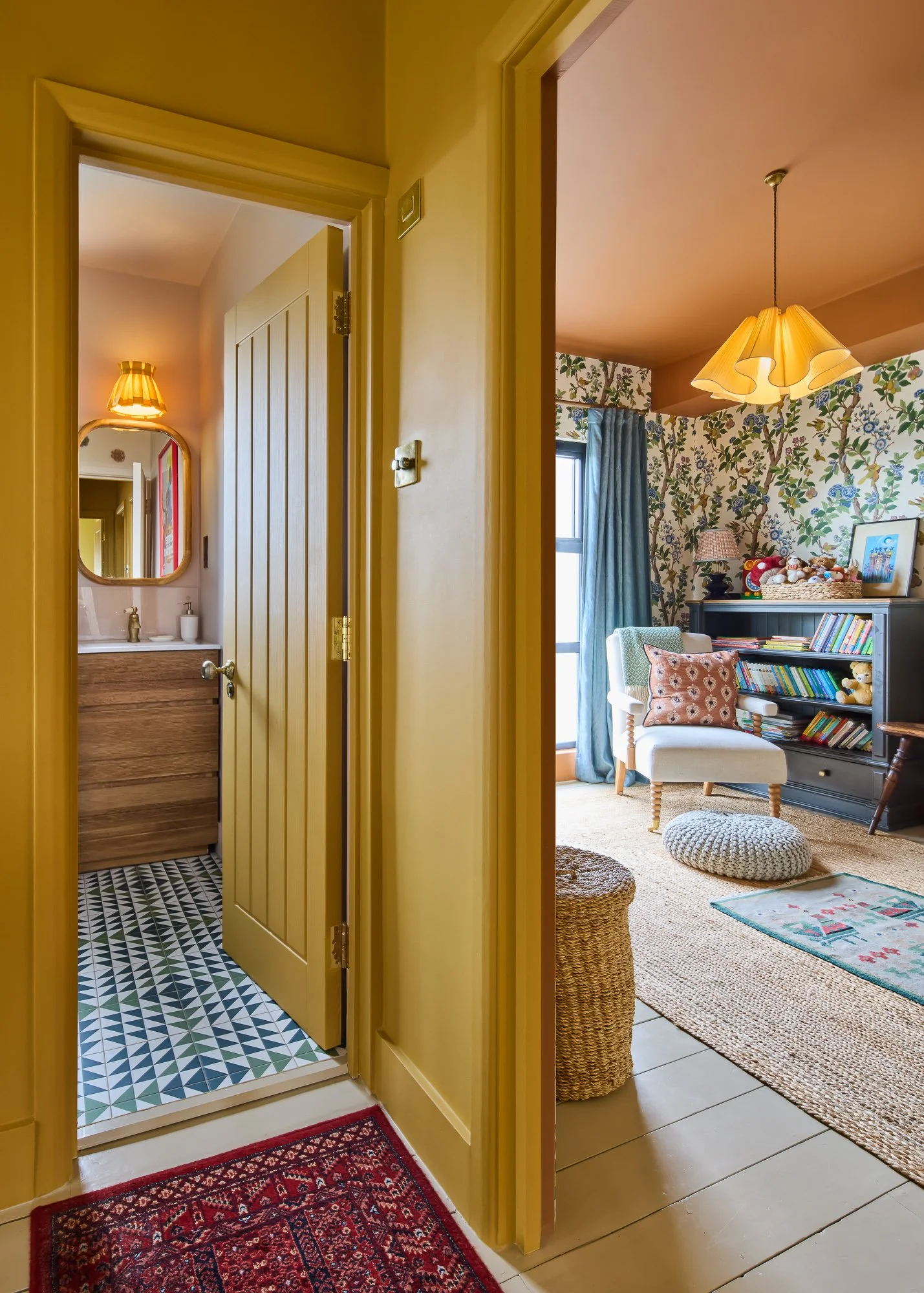
Ochre yellow in this landing
Using motifs, but with restraint
I like to find fabrics and motifs that genuinely mean something from a particular area, whether that's toile de jouy linked to France, chintz linked to England, or paisley for someone connected to Iran, India, or Scotland (places that all have a relationship with that motif). Sometimes the most interesting motifs sit between two cultures rather than within one: for a study I'm currently designing for a British client who spent part of his youth in China, I chose a chinoiserie wallpaper, a European interpretation of Chinese motifs and design, which felt like the right balance between the two. The same thinking applies when a motif feels too obvious: often I'd rather echo it than use it literally.
Approach
Applying it to a real home
Bringing in intentional, antique pieces
I bring in pieces that represent a client's story and their place, whether that's textiles, sculptures, or tiles, sourced from antique markets and dealers, online and in person, boutique shops, or gifts passed down within a family. They also help differentiate a home, giving it a character that's harder to replicate. What matters most with these pieces is the meaning they hold, and more often than not that means they're antique or vintage finds. In one home, an antique Alpine chair sits in a daughter's room, chosen because the time the family lived in Switzerland, where the parents met, was an important part of their story worth representing in the home. Anything that has been intentionally created evokes emotion, and those pieces should become the focal points within a room, helping tell a story and make a space unique. A Kuba cloth from the Congo, given to me by my mother, who received it from a friend, is a good example: reframed and placed above the fireplace in my living room, it makes the space feel layered, being both a textile and an antique, and it reminds me of my African heritage and the importance of family.
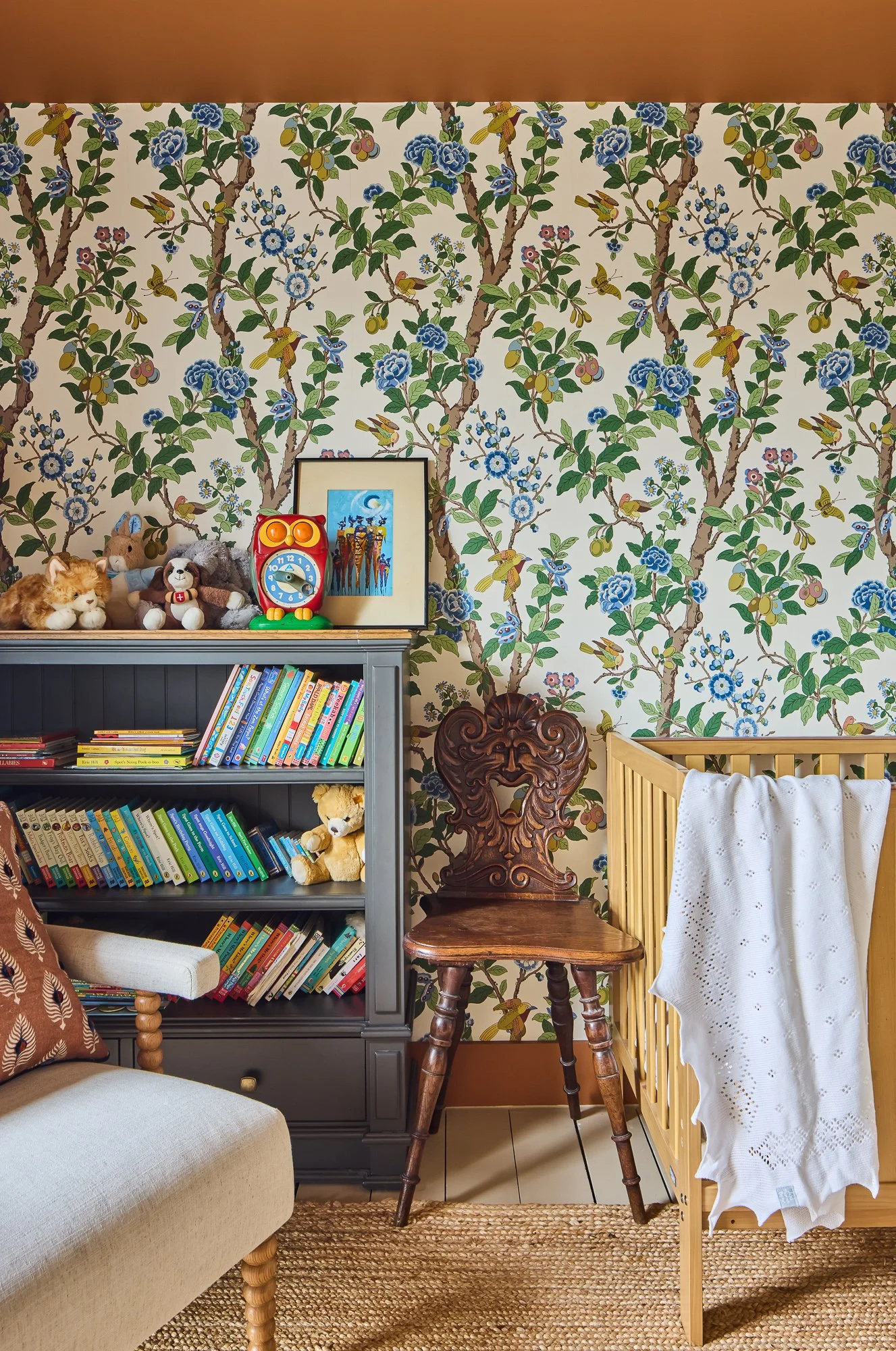
Antique Alpine chair
Translating it into the client's current context
Once those materials and colours are identified, the next question is how to use them in a way that also suits the environment a client actually lives in. I think of context as three things together: the people (their heritage), the property (the type of home, a Victorian terrace or a 1970s flat), and the place (where the home actually is, London, or the British countryside). All three shape how a piece of heritage translates into a room. In the Brockley loft, for example, the client's British and Nigerian background was central, but the property mattered just as much: it's a 1930s house. In the loo, I used the green, red and gold motifs of Nigeria alongside palm motifs in the art deco style of the period, playing on that era's fascination with travel, while the bold ruby reds and gold were also colours commonly used in 1930s decorating. The heritage and the property era pointed in the same direction, so the design could speak to both at once. For another client, in a 1970s flat, the property pushed in a different direction: the pieces referencing his Scottish heritage had to be chosen so they didn't feel too grand, and instead suited the style and period of the building.
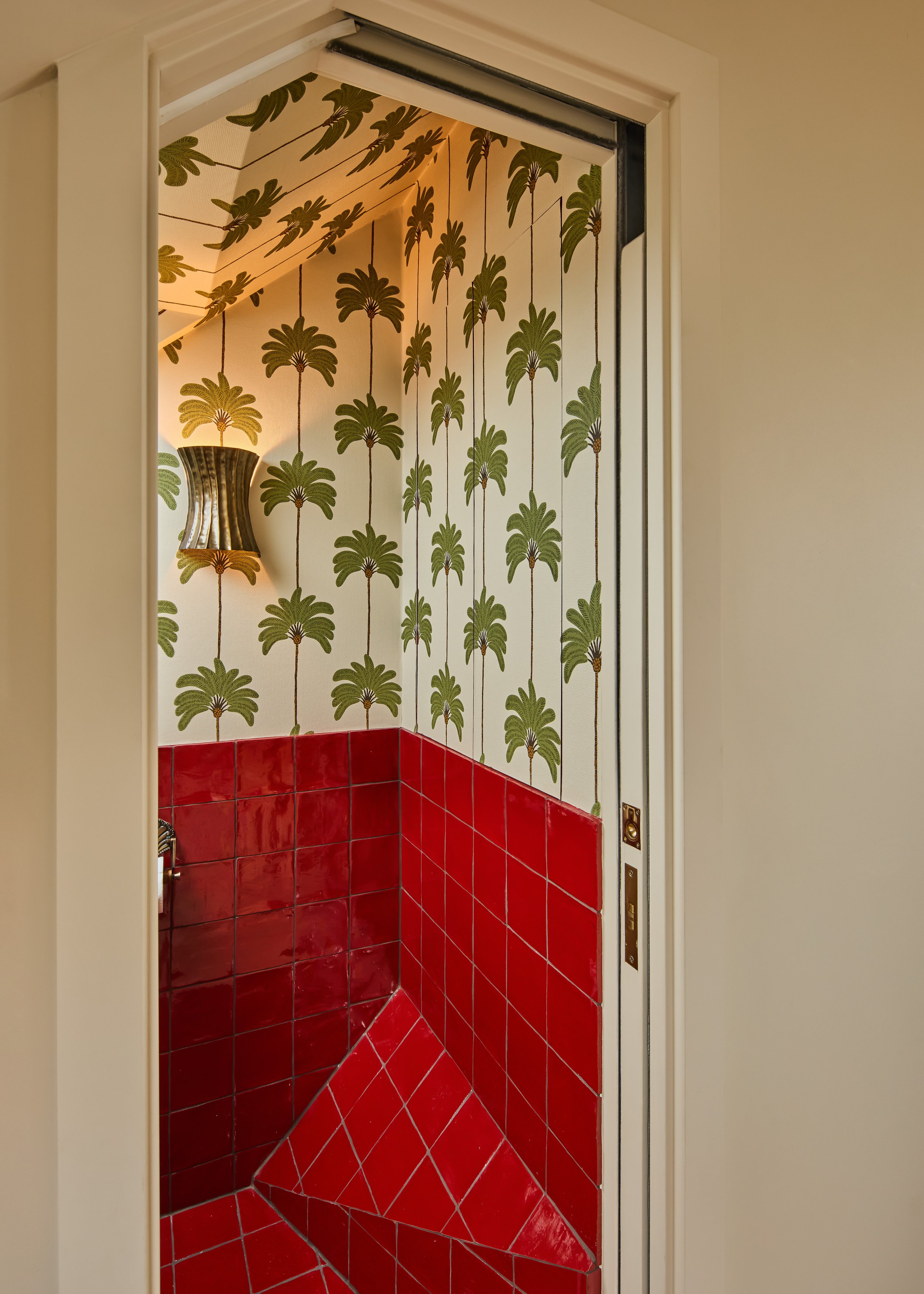
Nigerian and Art Deco inspired loo
Balancing it so it doesn't become too literal
The key is not to go too far; otherwise, it becomes over the top or too literal. I use contrast in every project to dial this back: pairing a strong heritage piece with something that's the opposite of what it represents, in look, colour, or feel. In the Brockley loft, for example, the loo is a bold, heritage-led space, while the rest of the bathroom is kept in muted tones, so the bold room really shines rather than competing with more of the same. That contrast is what gives a space depth, rather than making it feel like a pastiche.
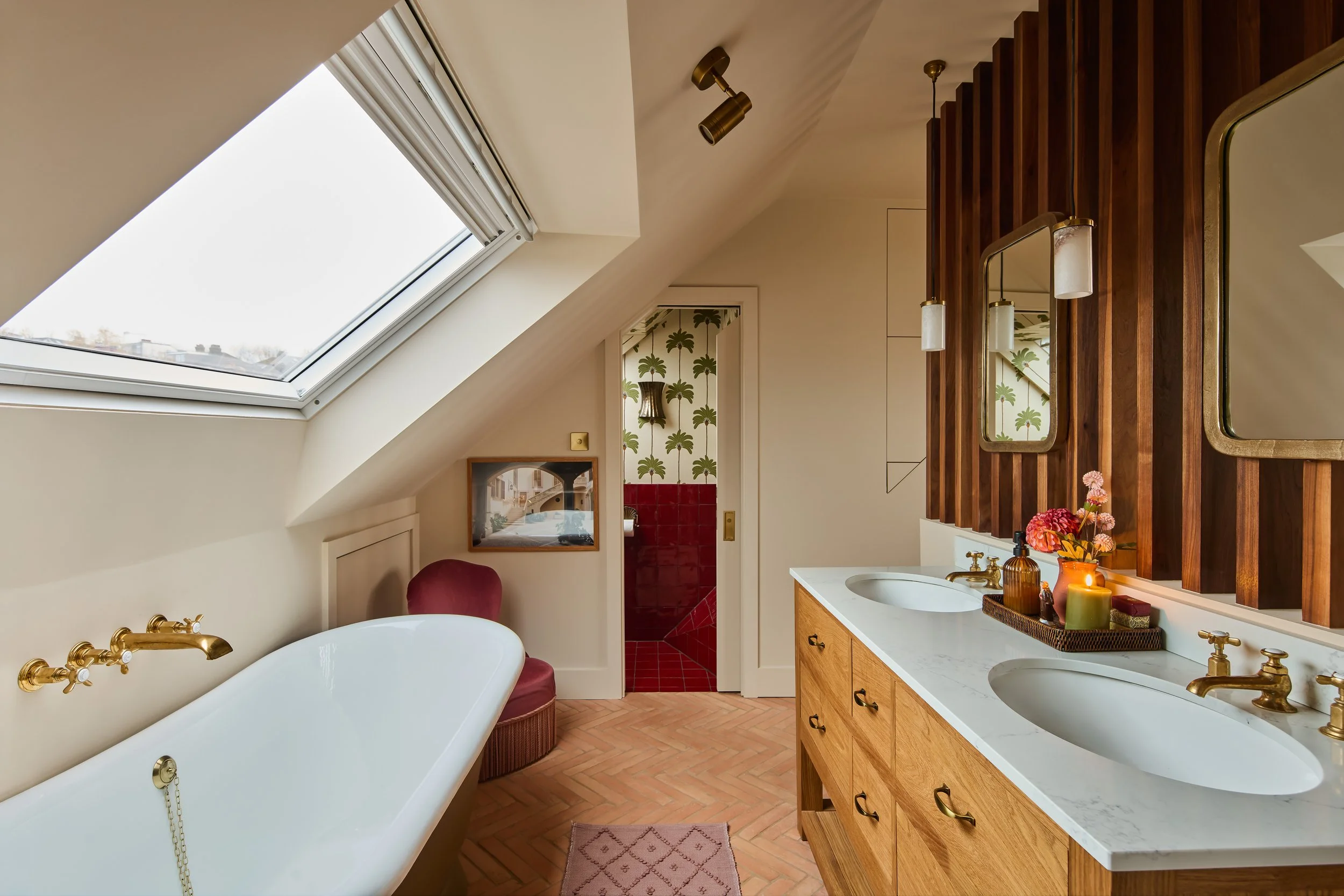
A bolder loo in a muted bathroom
Encouraging confidence in who you are
Above all, the most important thing I bring to this process is confidence: helping a client feel confident in who they are, and confident that expressing themselves fully in their home will always result in a space that brings them real pleasure, and makes their home unique. Part of my job is showing clients this and working with them so they understand that the bolder, more design-led decisions are rooted in their own story, heritage and experiences. When clients are willing to fully tell that story, the results are the most authentic, and they tend to look and feel the best too. The reception is often quite emotional: clients immediately feel at home, because the space speaks to exactly who they are, where they come from, and where they've been.
This is exactly the thinking behind every Chizitera Interiors project; we start with your story before we start with a colour swatch. Get in touch to talk about your space.
